“Now, try to touch your tongue to the roof of your mouth while making a noise like a cat purring.”
«Wait, what does that even mean? And how is everyone else able to do it?»
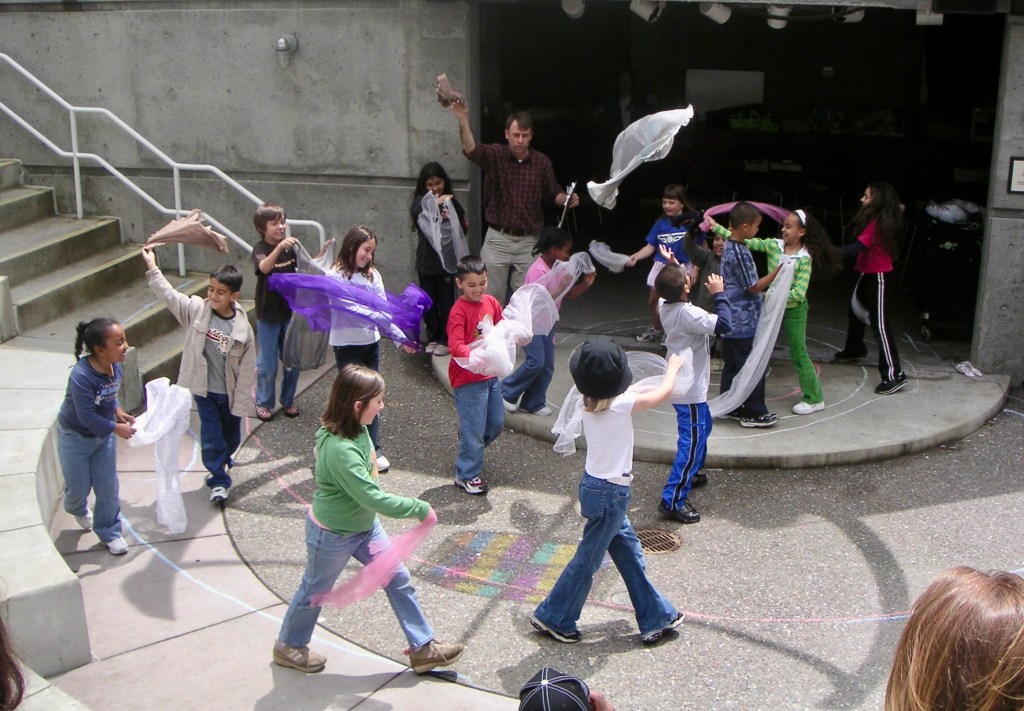
These were the questions racing through my mind as my kindergarten teacher tried showing us how to roll our r’s. After being on a waitlist for several weeks in the “mainstream” class, I finally made it into the dual immersion program. My school was the first in the district to offer the dual immersion program — a program where students would be immersed in a second language from kindergarten onward. This meant that all of my lessons in kindergarten were entirely in Spanish, with more lessons in English added each year. The program was designed to support both native English speakers to learn Spanish and native Spanish speakers to learn English.
My mom fought hard to get me into the program, and it wasn’t just because of the waitlist. Some family members had expressed concerns about what learning two languages at once could “mean for my future,” fearing that I might be held back cognitively, socially, or even face exclusion. As for their first two points, it is well-established that bilingual children are not any more likely than monolingual children to face cognitive or social difficulties. In fact, in some cases, bilingual children even demonstrate slightly better abilities. I digress.
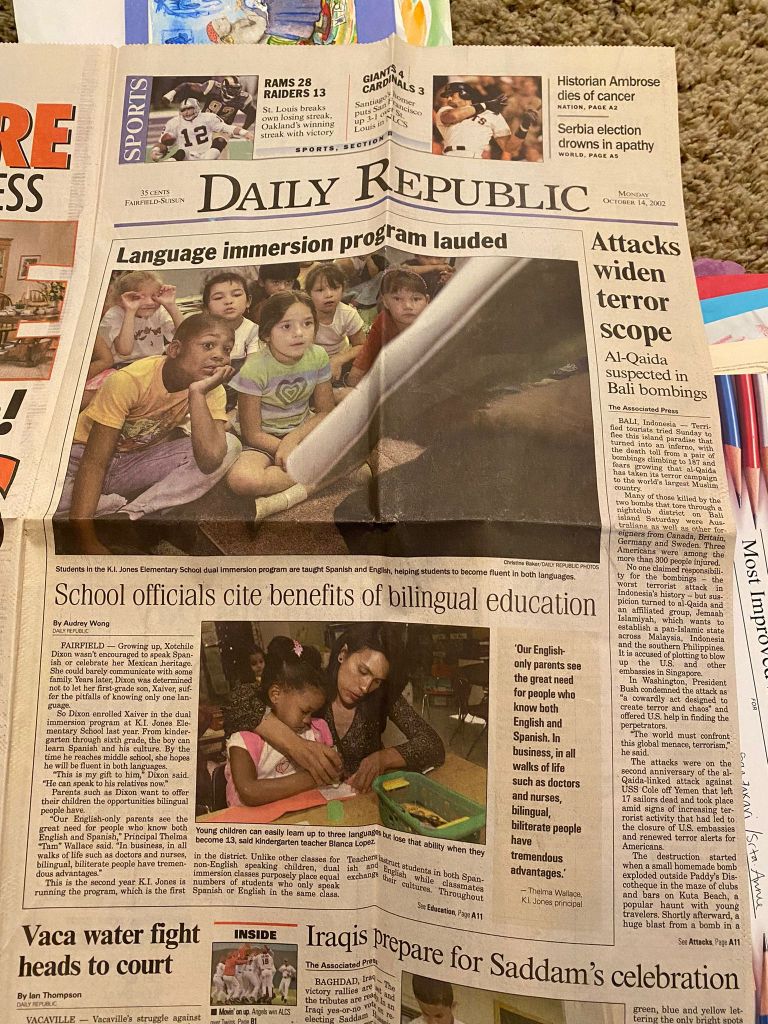
Regarding the third point, well… they weren’t entirely wrong. At the time, I was unaware of the battles that the teachers and parents had to fight to acquire the resources needed to start and continue the program. The school principal who initiated the program left after three months due to personal reasons, leaving us without an internal advocate. This became quite the challenge as our program required more resources than the mainstream classes. Training plans had to be created. Fliers translated. Textbooks ordered in English and Spanish. Some staff members perceived the parents’ requests as demanding, or they simply didn’t know how to support. No staff member spoke Spanish. Still, the school board held high expectations for the program’s performance. Fighting to keep the program alive, the parents often took on the burden of paying for the resources themselves, translating materials, and actively supporting in the classroom.
When I was about ten years old, we transferred to a new school as part of a long-term plan for it to be converted into a fully dual immersion school. Unfortunately, this meant that some teachers there would be let go, and some kids in the nearby neighborhood would have to travel slightly further to get to school. But it was clear then that people weren’t only upset about the logistical changes that came along with us relocating. Some of our parents said that they experienced racism — both overt and covert.
And it wasn’t just the parents who faced this. Despite us learning two languages at once, the mainstream kids would sometimes label us as less intelligent. Actually, since they were kids, I think they just called us dumb. But kids are just kids; it is adults that they learn from.
“Oh, so you’re the dual immersion kids. I don’t see what makes you so special.” These were the first words that our new physical education teacher chose to share with my class upon first meeting. His announcement would be one thing if it weren’t for the fact that this man also had the power to make us run. At that age, I couldn’t grasp why comments like these were directed toward us. I just internalized that we were somehow different.
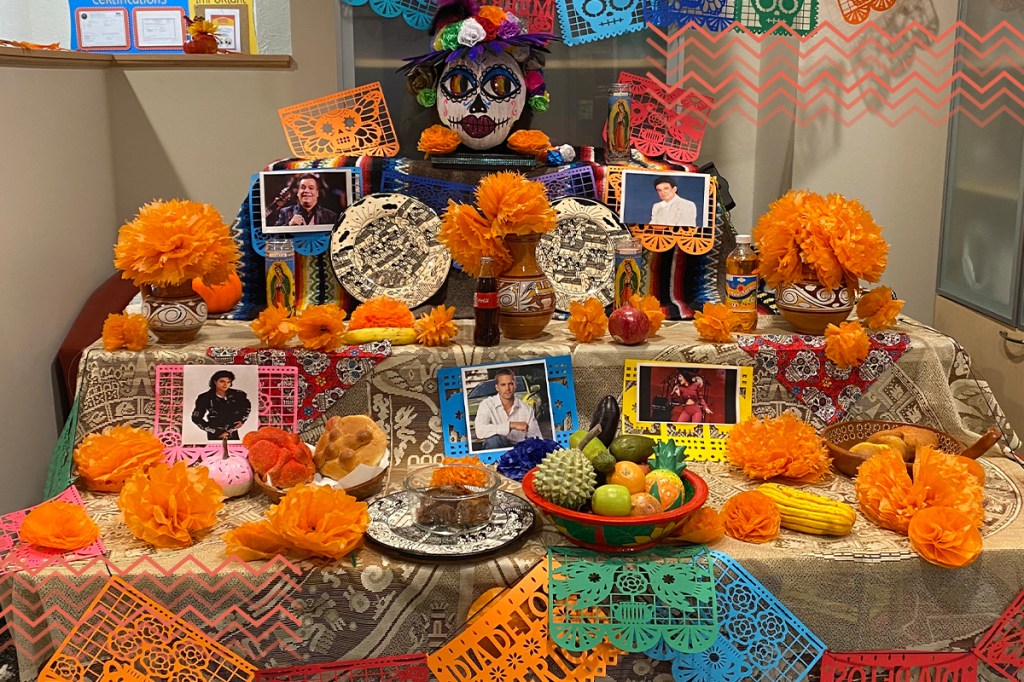
But within the bounds of our classroom, language and culture were things to be celebrated. Our class was comprised of students representing many heritages, particularly Latin American. We celebrated this diversity through food, music, and, of course, parties. One of my favorite holidays was Día de los Muertos (Day of the Dead), a Mexican holiday celebrated on the first and second of November. In the week leading up to the holiday, we would decorate our classroom with papel picado (colorful paper with cut-out patterns), calaveras (painted skeletons), cempasuchil (marigolds), and prepare our ofrendas (altars) with photos of loved ones no longer with us. These holidays often came with some of the best food I had ever had: tamales, pupusas, tacos — all homemade with love. As a kid, I could recognize that this was not my culture, but I also knew that I was welcomed into it. As a result, I felt encouraged to share my family’s traditions as well, which mostly pertained to sharing (Norwegian-American) lefse with my classmates during the Christmas holidays.
By the time I was around ten years old, despite being immersed in Spanish in the classroom, I still felt like I was missing the level of fluency I felt like I should have. The truth is, I was still speaking mostly English in my daily life at home and with friends. I remember one specific day very well when my teacher, while talking about her experiences studying in Latin America, told us, «You will only ever be fluent if you are forced to speak the language every day.» She went on to explain how this is far more realistic if you are living abroad and must speak the language to survive.
This concept blew my ten-year-old mind. Up until that point, I had never conceived that living in another country was an even option. From there onward, I became determined to one day live in a Spanish-speaking country and claim my fluency.
Coming full circle, I am writing this from a farm in Spain, where I am currently living to conduct research as part of a Master’s program. Haley at twelve years old probably wouldn’t be surprised that studies would eventually bring her here. I can’t say the same about the farm part. I have to confess, I am still not fluent in Spanish. Living with nine international students means speaking English most of the time (and some Dutch… and some Italian). Nevertheless, my life has been far richer because of the linguistic and cultural immersion I had at such a young age.
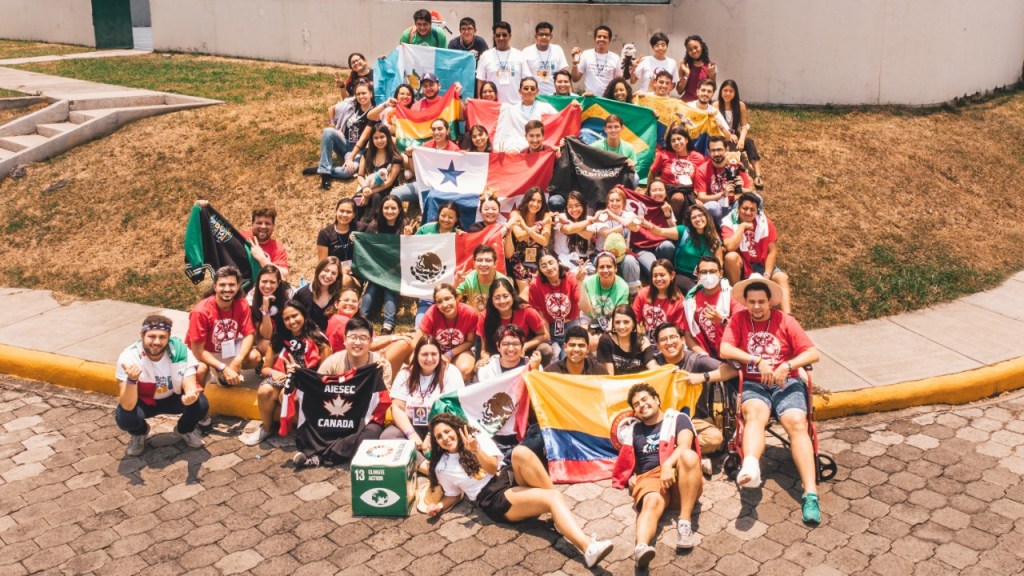
Beyond the cognitive and social benefits that came with learning a second language as a child, this “type of education” embedded within me an openness and adeptness to connect with people across cultures. During my undergraduate studies, I began volunteering with a global NGO with the mission to build cross-cultural understanding. Over five years, I connected with people across 100+ countries and territories and attended conferences from Turkey to Mexico and in between. I am profoundly grateful for having these experiences in my early 20s as they have opened my mind to the breadth of ways to perceive the world, making me a more compassionate human (I like to think).
Cultural immersion can come in many forms. In my experience, it came through immersive participation in another language and culture from a young age. However, I had the privilege of being a white, native English speaker in the United States. In other words, when I left the classroom, exclusion and discrimination didn’t follow me home. Ironically, my hometown is known as one of the most diverse places in the U.S., and still, discrimination occurred. It is important to remember that people of all backgrounds can discriminate, even toward people who look like them. As much as we like to say that we celebrate different cultures, traditions, and languages, I think we still have some work to do. And that progress can only happen if we first try to understand ourselves a bit better.
It has been over a decade since I graduated from the dual immersion program, so why do I share this now? For most of my life, I’ve thought success looked like becoming a fluent Spanish speaker through living in a Spanish-speaking country. Now living here in Spain, albeit briefly, I’ve come to realize that it doesn’t really matter if I speak Spanish perfectly. I have already been able to give directions to people lost and confused on the streets of New York City. I have already navigated life-or-death situations in rural Costa Rica. I have brought many people closer to connecting and empathizing with each other through translating word-by-word.
So yes, parents, please consider enrolling your kids in a dual immersion program so that they might one day have better job prospects and slightly better cognitive and social abilities. But more than that, please do so because of the richness that cultural immersion can have on their life and the lives of people around them.
Ultimately, I am sharing this now to express my lifelong advocacy for cross-cultural immersion, especially for youth. What we know for certain is that people will continue to move countries — some out of privilege and others out of necessity. I strongly believe that this trend presents a wonderful opportunity for learning and growth in more diverse communities. However, this is only possible if we recognize the value of cross-cultural immersion and get to work on creating more compassionate systems to enable it.
Afterword
Thank you for reading. This story is quite personal to me and is a culmination of, really, a lifetime of experiences and reflection.
I want to express my deep gratitude for the phenomenal teachers and parents who pioneered this program, who often worked harder, with fewer resources, and faced more critique, all the while demonstrating unwavering compassion and commitment.
 Living Canopy
Deja un comentario