
My teammate slid the letter under my nose as I stared into my laptop. Haley, I really think you should read this one, it looks official, he said.
It was the third invitation. Over the last few months, I received several emails inviting me as a complimentary guest to attend the Wall Street Journal CEO Council Summit. To be honest, I thought they were spam. It just sounded too good to be true, especially the complimentary part. As I wondered about how they found my address, I slowly started opening the neatly wax-sealed envelope to find an even more formal letter inside. Okay, so this is actually legitimate, I thought.
It wasn’t my first time experiencing imposter syndrome in the role. In fact, I felt it even before I was elected. My election came at one of the darkest moments of the pandemic. I had begun to normalize the sound of sirens from ambulances rushing down the street every few minutes. It was December 2020 in New York City and I was running for the role of President & CEO of AIESEC U.S., the U.S. branch of the world’s largest youth-led non-profit. AIESEC was established at the end of World War Ⅱ when seven young people across seven countries/territories had the dream of building cross-cultural understanding across nations. Since then, AIESEC has supported youth leadership development experiences at home and abroad.
There I was, running to lead an organization dependent on international exchange programs for revenue during a global pandemic. And I was 24.
Working for a youth-led organization, being CEO at my age wasn’t unusual. But I can tell you that I stuck out like a sore thumb at that CEO Council event. My Uber driver dropped me off at the doors of the (very grand) hotel venue. Tugging my grandpa’s luggage from the 1960s with a broken wheel, I approached the check-in desk with intensifying self-consciousness. In a sea of impeccably-dressed people, I suddenly became aware of my imperfectly fitted blazer… which really was a pity because I spent a decent portion of my last paycheck on it. Eventually, a staff member offered to bring my bag to my room. Nervous that I didn’t have the cash for a tip, I declined and carried on while (internally) cursing my grandpa’s luggage.
I had a slight confidence boost when the welcoming committee expressed their gratitude for my attendance. We consider it very important to have someone to represent the younger generation, they said. I felt honored, but then realized that the person closest in age to me was about ten years older and was a WSJ staff member. I couldn’t possibly represent the entirety of youth. As I approached the crowd during the “networking space,” I couldn’t shake the feeling of not belonging. In fact, I think this was the most out-of-place I had ever felt. This feeling crescendoed while sitting front-row to a keynote with Bill Gates, surrounded by CEOs of some of the world’s largest companies.
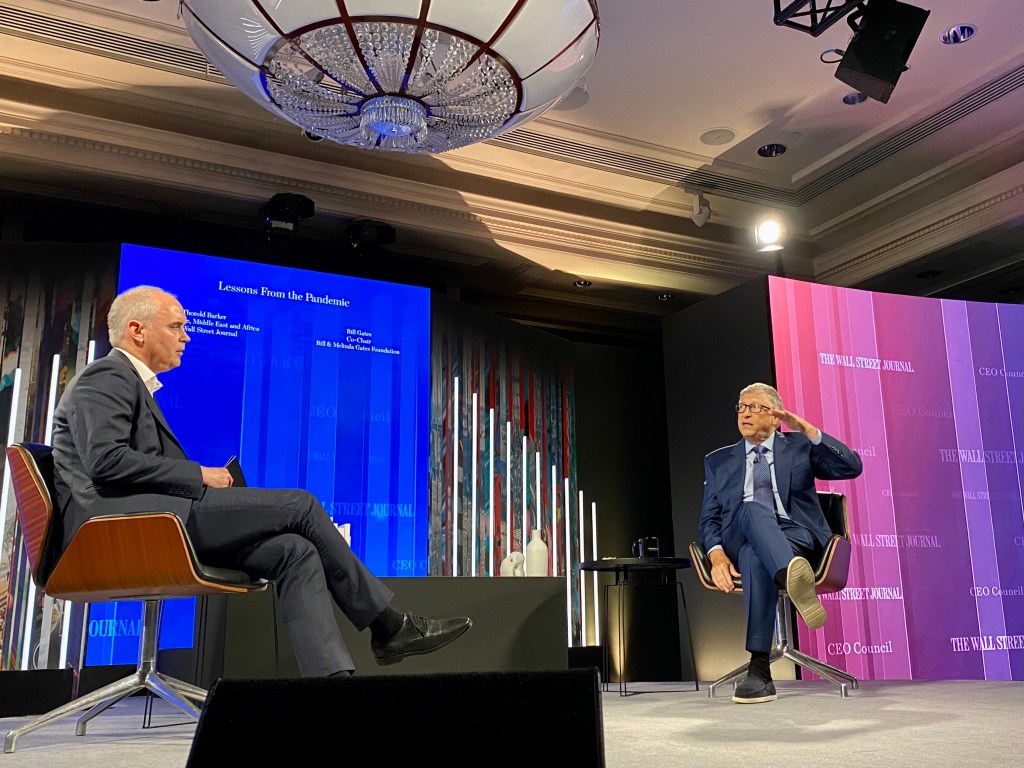
Making it back to my room at the end of the day, I took a deep, shaky breath to release some adrenaline. I wanted, no, needed, tomorrow to go differently… but how?
While sipping on the most expensive hotel room teas of my life, I thought of a conversation I had with a board member as he helped me prepare for my first-ever podcast interview. I had been listening to several of its episodes for inspiration and to prepare what I wanted to share. I soon realized that this was a horrible idea when I came across an episode of a guest talking about a conversation he had with Bill Gates on a jet.
In panic, I called my board member. How am I supposed to be the next guest? I’m definitely not as interesting as this guy in a jet with Bill Gates, I said.He calmly replied, I would much rather listen to a story of someone I can relate to. I can’t relate with someone talking to Bill Gates on a jet.
Although I didn’t fully believe him yet, when it came time for the interview,I took his advice. I talked about why it is important to support young people to develop leadership skills and cross-cultural understanding. But most importantly, I did so by sharing my quite average experiences.
I took his advice again the next day. While I still had many nervous moments, I chose to engage with people under the assumption that we are far more similar than different. Focusing less on people’s labels (age, gender, company) or image (perfectly fitted suit), I found it far easier to approach them, engage with them, and ultimately, relate with them. More importantly from a leadership perspective, I was able to speak up, at least within my means, on behalf of the “younger generation.”
It is worth noting that not everyone responded so openly to my approach. In fact, some people appeared to even be offended. I will never know exactly what was going on in some people’s heads as they scoffed or sneered at me, however, I can only imagine that perhaps they saw me, a young woman with their title, and felt threatened. Because if we were supposed to be equals at this event, then what would my attendance say about them?
I do not blame these people too much. Imposter syndrome is a gut-wrenching feeling, and maybe, at one point in their life, they found it easier to use labels and status to build walls around their egos. Still, I believe that far more people would prefer to connect authentically and that every time we receive people with openness, we create space for more people to let go of some of these walls.
This is my story of being at a fancy conference with Bill Gates.
Not very relatable, I know.
 Living Canopy
Deja un comentario